
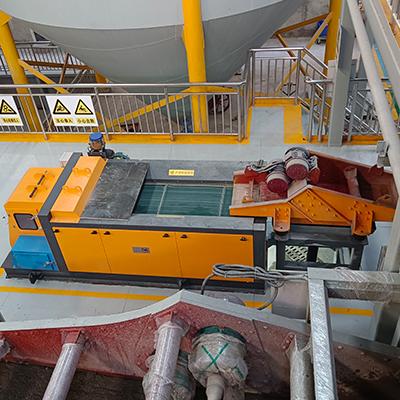
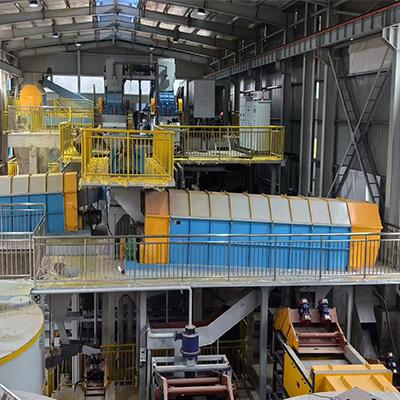
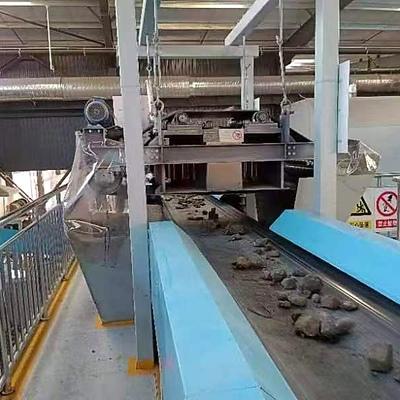
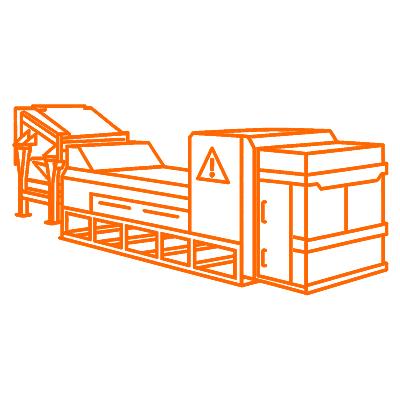
In many recycling plants, the performance of an EDDY CURRENT SEPARATOR is not only determined by the separator itself. The material condition before separation plays a major role in the final recovery result. If the feed material is uneven, oversized, too fine, too wet, or mixed with heavy contamination, even a high-quality EDDY CURRENT SEPARATOR may not reach its best performance.
This is why screening before eddy current separation is an important step in many recycling sorting lines. A TROMMEL screen or other screening equipment can help control material size, improve feeding stability, and prepare the material stream for more accurate non-ferrous metal recovery.
For recycling plants processing ASR, Zorba, UBC, plastics, glass, IBA, and mixed scrap, proper screening can make the entire sorting process more stable and efficient.
Why Material Size Matters in Eddy Current Separation
An eddy current separator is designed to separate conductive non-ferrous metals such as aluminum, copper, brass, and zinc from non-metallic materials. When these conductive particles pass through a high-speed MAGNETic rotor, they are ejected forward into a separate discharge area. Non-conductive materials follow a different path.
However, this separation process depends heavily on material size and feeding condition.
If the material size is too large, heavy pieces may not follow the expected separation path. If the material is too fine, small particles may be difficult to eject clearly. If large and fine materials are mixed together in one thick layer, valuable non-ferrous metals may be buried under other materials and fail to separate effectively.
A stable and controlled material size range allows the eddy current separator to work more accurately. This helps improve recovery rate, reduce metal loss, and increase the purity of recovered materials.
Common Problems Without Proper Screening
When recycling plants feed unprepared material directly into downstream separation equipment, several problems may occur.
Common issues include:
Uneven material distribution on the belt
Oversized materials blocking or disturbing the flow
Fine materials carrying valuable metals into residue
Thick material layers covering non-ferrous particles
Reduced separation accuracy
Lower recovery rate
Higher contamination in final products
Increased equipment wear
More manual sorting work after separation
These problems are common in complex recycling streams such as auto shredder residue, incinerator bottom ash, mixed plastics, crushed glass, and mixed scrap. Without proper preparation, the separation line may become unstable, and valuable metals may be lost.
The Role of TROMMEL Screening in Recycling Lines
A TROMMEL SCREEN is commonly used to separate materials by size before downstream sorting. As the drum rotates, smaller particles pass through the screen holes, while larger materials move forward to a different discharge area.
In a recycling sorting line, TROMMEL SCREENing can help divide mixed materials into more suitable fractions. Each fraction can then be processed with the right equipment and settings.
Trommel screening can help recycling plants:
Control material size before separation
Improve feed stability
Reduce overload on downstream equipment
Prepare materials for MAGNETic separation
Improve eddy current separation performance
Reduce contamination in final products
Support better recovery from mixed material streams
For complex materials, screening is not only a preparation step. It is part of the whole recovery strategy.
Why Screening Helps Magnetic Separation
Before eddy current separation, ferrous metals should usually be removed by a MAGNETIC SEPARATOR. This step helps protect downstream equipment and creates a cleaner feed for non-ferrous recovery.
Screening before magnetic separation can also improve the performance of the MAGNETIC SEPARATOR. When material size is more uniform, iron and steel pieces are easier to expose and remove. This reduces the chance of ferrous metals being carried into the eddy current separator.
A better prepared material stream can help the magnetic separator remove ferrous metals more effectively. This improves the overall quality of the sorting process and reduces unnecessary wear on downstream machines.
Why Screening Helps Eddy Current Separation
After ferrous metals are removed, the material stream enters the eddy current separator for non-ferrous metal recovery. At this stage, stable feeding is very important.
Screening helps eddy current separation in several ways.
First, it reduces oversized materials that may disturb the separation trajectory. Second, it separates fine particles that may require different machine settings. Third, it helps create a more even feed layer on the conveyor belt. Fourth, it allows the separator to work with a more suitable material size range.
When the material layer is thin and even, non-ferrous metal particles are more likely to be exposed to the magnetic field and ejected properly. This improves separation accuracy and reduces the loss of valuable metals in the residue stream.
Applications Where Screening Is Especially Important
ASR Recycling
Auto shredder residue often contains plastics, rubber, foam, glass, textiles, wires, ferrous metals, and non-ferrous metals. The material is highly mixed and irregular. Screening can help divide ASR into suitable size fractions before magnetic and eddy current separation, improving recovery stability.
Zorba Processing
Zorba contains mixed non-ferrous metals and impurities. Screening helps control the material size before further separation and upgrading. A more stable size range can improve downstream sorting performance and product quality.
UBC Recycling
Used beverage cans may be mixed with light packaging, plastics, paper, and other materials. Screening can help remove unsuitable material sizes and support more stable aluminum recovery.
Plastic Recycling
Plastic recycling streams may contain aluminum flakes, copper pieces, wires, and ferrous contaminants. Screening helps prepare plastic materials for magnetic separation and eddy current separation, reducing the risk of metal contamination in downstream plastic processing.
Crushed glass often contains metal caps, aluminum pieces, wires, and fine impurities. Screening can help separate fine glass from larger contaminants and improve the efficiency of metal removal.
Incinerator bottom ash often contains valuable metals in different PARTICLE SIZES. Screening is very important in IBA treatment because different size fractions may require different separation settings. Proper screening can help improve ferrous and non-ferrous metal recovery from ash streams.
A Complete Process Works Better Than a Single Machine
In recycling, one machine cannot solve every separation challenge. A strong sorting line usually depends on a combination of equipment.
A typical process may include:
Feeding system
Trommel screen
Magnetic separator
Eddy current separator
AI separator
Manual quality control
Conveying and discharge systems
Each machine has its own role. Screening prepares the material. Magnetic separation removes iron and steel. Eddy current separation recovers non-ferrous metals. AI sorting can further improve material recognition and final product purity.
When these machines work together, recycling plants can achieve better recovery performance than using a single separator alone.
Key Factors for Better Separation Performance
To improve the performance of a recycling sorting line, operators should pay attention to several factors:
Material size range
Moisture level
Feed layer thickness
Feeding speed
Screen hole size
Magnetic separation efficiency
Eddy current rotor speed
Belt speed
Splitter position
Material composition
Final product requirements
For fine materials, stable feeding and accurate screening are especially important. If the material is too wet, sticky, or unevenly distributed, separation performance may be reduced. The equipment layout should be designed based on the real material condition, not only on the machine model.
CurrenTek Recycling Sorting Solutions
CurrenTek provides trommel screens, magnetic separators, eddy current separators, AI separators, and complete sorting solutions for different recycling applications. Our equipment can be used for ASR recycling, Zorba separation, UBC recycling, plastic recycling metal separation, GLASS RECYCLING metal removal, IBA treatment, and mixed scrap processing.
We focus on helping recycling operators build practical and efficient sorting processes. Instead of only supplying a single machine, CurrenTek can recommend suitable equipment combinations based on material type, particle size, capacity, contamination level, and recovery goals.
For plants that want to improve non-ferrous metal recovery, screening before eddy current separation is often a key step. A well-prepared material stream can help the separator work more efficiently and reduce the loss of valuable metals.
Building a More Stable Recycling Line
As recycling materials become more complex, stable process design becomes increasingly important. Screening, magnetic separation, and eddy current separation should not be treated as separate machines only. They should work together as part of a complete sorting system.
By adding proper screening before eddy current separation, recycling plants can improve feed stability, increase recovery rate, reduce contamination, and create cleaner final products.
For operators processing ASR, Zorba, UBC, plastics, glass, IBA, or mixed scrap, a well-designed sorting process can help turn mixed waste streams into higher-value recovered materials.
Contact CurrenTek to discuss your material type, capacity, particle size, and recovery target. Our team can help recommend a suitable sorting solution for your recycling operation.
